


China’s economic reforms have opened new doors for foreign investors, but restrictions remain in key sectors. Understanding the 2024 Negative List and regulatory nuances is crucial for British businesses eyeing the world’s second-largest market.
China’s economic allure, with a projected GDP growth of around 5% for 2025, continues to draw global investors, including British firms seeking to tap its vast consumer base and innovation-driven markets. However, the country’s foreign investment regime, governed by the Foreign Investment Law (FIL) of 2019, balances openness with stringent controls, particularly in sectors deemed sensitive to national security or cultural identity. For UK businesses, navigating these restrictions is essential to unlocking opportunities in a market where bilateral trade reached £111 billion in 2022.
The Framework: Foreign Investment Law and Negative Lists
Enacted on 1 January 2020, the FIL transformed China’s approach to foreign direct investment (FDI) by replacing a patchwork of approval-based rules with a unified framework. The law promotes “national treatment,” ensuring foreign investors are treated similarly to domestic ones, except in sectors outlined in the Negative List for Foreign Investment Access. The 2024 edition of this list, issued by the National Development and Reform Commission (NDRC) and the Ministry of Commerce (MOFCOM) on 8 September 2024 and effective from 1 November 2024, reduced restricted and prohibited sectors to 29 from 31 in 2021, signalling progressive liberalisation. Prohibited sectors include news media, internet publishing, and audio-visual production, reflecting China’s tight grip on information and cultural industries. Restricted sectors, such as telecommunications and medical institutions, often require joint ventures with Chinese partners, with foreign equity typically capped at 50%.
Complementing the Negative List is the Market Access Negative List, which applies to both domestic and foreign investors. In April 2025, this list was trimmed to 106 items from 117 in 2022, easing barriers in sectors like hotel management and construction. Free Trade Zones (FTZs), such as those in Shanghai and Guangdong, operate under a separate FTZ Negative List, which is less restrictive but still enforces sector-specific rules. For example, while the 2024 Negative List lifted all manufacturing restrictions nationwide, FTZs had already relaxed these rules in 2021, offering British firms in fintech and professional services a testing ground for investment. However, inconsistencies between these lists can complicate compliance, and firms should seek expert guidance.

Sector-Specific Restrictions
Manufacturing: A New Era of Openness
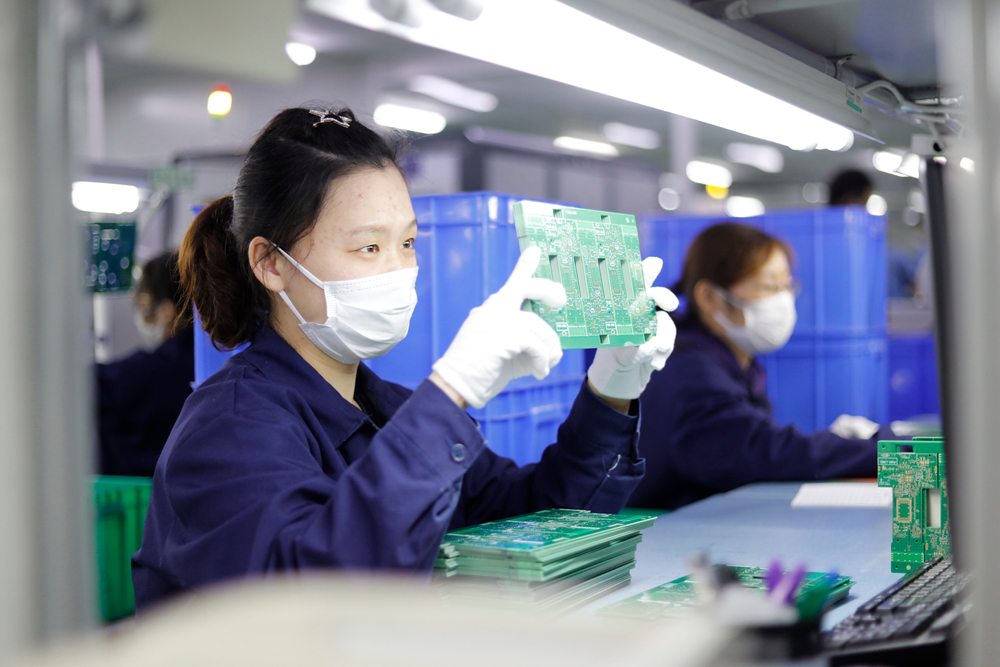
The most significant reform in 2024 was the complete removal of foreign investment restrictions in manufacturing. Previously, sectors like publication printing and traditional Chinese medicine processing faced ownership caps or joint venture requirements. Effective 1 November 2024, these barriers were eliminated, allowing wholly foreign-owned enterprises to operate freely in manufacturing. This aligns with China’s “Made in China 2025” strategy, which prioritises high-end manufacturing and innovation. For UK firms in advanced manufacturing, such as aerospace or clean technology, this presents a golden opportunity to establish fully controlled operations, though local competition and IP risks remain concerns.
Services: Gradual Liberalisation
The service sector, critical for UK exporters in finance, healthcare, and technology, is undergoing cautious liberalisation. In telecommunications, pilot programmes in cities like Beijing, Shanghai, and Hainan, launched in April 2024 and expanded in 2025, relaxed foreign ownership restrictions for value-added services, including Internet Data Centres and Content Delivery Networks. The 2024 Negative List also removed foreign equity caps in app store services, reflecting China’s push to integrate AI and digital services. However, basic telecommunications services still require Chinese control, limiting foreign influence in core infrastructure.
Healthcare, a priority under the “Healthy China 2030” initiative, saw a landmark reform in 2024. A joint circular from MOFCOM, the National Health Commission, and the National Medical Products Administration permitted wholly foreign-owned hospitals in nine cities, including Beijing, Shanghai, and Hainan. This shift, effective from 1 November 2024, opens doors for UK biosciences firms, but strict regulations persist. Approvals for medical services and compliance with human genetic resource rules for research involving stem cells or gene therapy are mandatory, requiring robust due diligence.
Financial Services and Listed Companies
China’s financial sector, a stronghold for UK firms like HSBC, has seen progressive easing. The 2020 Negative List lifted equity caps for foreign investors in banking, securities, and insurance, allowing full ownership in certain financial services. In November 2024, rules for foreign investment in listed companies were relaxed, lowering the asset threshold for non-controlling investors from $100 million to $50 million and introducing tender offers as an approved investment method. These changes aim to attract capital to China’s stock markets, though geopolitical tensions and market volatility may temper enthusiasm.
Data, Cybersecurity, and Anti-Espionage Laws
China’s data and cybersecurity regulations pose significant challenges for foreign investors, particularly in tech-heavy sectors where the UK excels. The Cybersecurity Law of 2017, updated in 2024, mandates local storage of personal and “important” data and requires government approval for cross-border transfers. The Personal Information Protection Law (PIPL) of 2021 further tightens data handling, impacting firms in e-commerce and digital services. The Anti-Espionage Law, amended in July 2023, expanded its scope to include “documents, data, or materials” related to national security, raising concerns about vague enforcement. Foreign firms, including UK tech companies, must navigate these laws carefully, as compliance failures can lead to fines or operational bans. The CBBC recommends partnering with local legal experts to ensure adherence while protecting IP, especially in China’s first-to-file patent system.
Geopolitical and Trade Considerations
The U.S.-China trade war, escalating in 2025 with U.S. tariffs on Chinese goods reaching 145%, has ripple effects for foreign investors. Dual tariffs—125% on components imported into China and 145% on exports to the U.S.—complicate supply chains for manufacturers reliant on China for assembly. While the UK faces fewer direct trade barriers, China’s retaliatory measures, such as rare earths export controls in April 2025, underscore its economic leverage. British firms benefit from a stable UK-China relationship, reinforced by the UK-China Economic and Financial Dialogue (EFD) in 2025, which eased barriers in agri-food exports. However, the UK’s National Security and Investment Act (NSI) mirrors China’s scrutiny, requiring notifications for investments in 17 sensitive sectors, highlighting the need for transparency in bilateral deals.
Incentives and Challenges
China’s Catalogue of Encouraged Industries, updated in 2024, incentivises investment in high-tech fields like gene sequencing and green energy, offering tax breaks and land-use subsidies. The “24 Point Guidelines” of 2023 promote equal treatment in government procurement and streamline data flows, though local implementation varies. Despite these efforts, challenges persist. A 2023 CBBC survey found 73% of British multinationals faced restrictions, from opaque licensing to discriminatory procurement. The World Bank’s 2023 transparency score of 1.75 out of 5 reflects regulatory complexity, particularly for SMEs. Bureaucratic delays in profit repatriation and local competition further complicate operations.
Strategic Considerations for British Businesses
For UK firms, success in China hinges on strategic planning. The CBBC offers market insights and partner vetting, critical for navigating restrictions. Local partnerships can ease compliance, especially in restricted sectors like healthcare. Understanding consumer preferences and digital platforms like WeChat is vital, as is safeguarding IP through proactive registration. Collaborations, such as Westwell Holdings’ AI-powered trucks at Felixstowe port, showcase UK-China synergy in aligned sectors like AI and clean tech.
China’s investment regime is evolving toward greater openness, but restrictions in services, data, and sensitive sectors remain. For British businesses, the challenge is to balance compliance with ambition, leveraging China’s market while mitigating risks. With careful navigation, UK firms can capitalise on this dynamic economy, fostering mutual growth in a globally connected world.